15 Must-Have Features Every School ERP System Should Include in 2026
Quick Answer
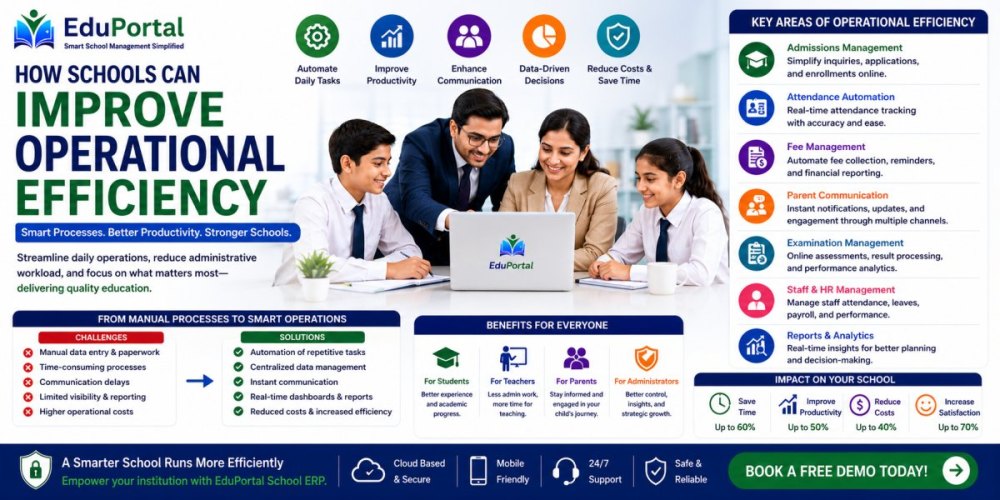
The best School ERP systems in 2026 do much more than manage student records. Modern schools need an integrated platform that automates admissions, attendance, fee collection, examinations, communication, reporting, and administrative workflows. The most important School ERP Features include student information management, smart attendance tracking, fee management, examination management, parent communication tools, cloud accessibility, reporting dashboards, mobile applications, and data security controls.
For school owners and administrators, choosing an ERP with the right features can significantly reduce administrative workload, improve operational efficiency, increase parent satisfaction, and support long-term growth. Investing in a comprehensive School ERP is no longer just a technology decision—it is a strategic investment in the future of the institution.
Introduction
Running a school in 2026 is far more complex than it was a decade ago.
Schools are expected to manage increasing student enrollments, communicate effectively with parents, maintain accurate records, comply with regulations, and provide a modern educational experience. At the same time, administrators are under pressure to improve efficiency while controlling operational costs.
Many institutions still rely on spreadsheets, paperwork, and disconnected software tools. These systems often create duplicate work, communication gaps, reporting delays, and administrative bottlenecks.
This is where a modern School ERP becomes essential.
However, not all ERP solutions are created equal.
Some systems offer only basic functionality, while others provide a complete ecosystem capable of transforming school operations.
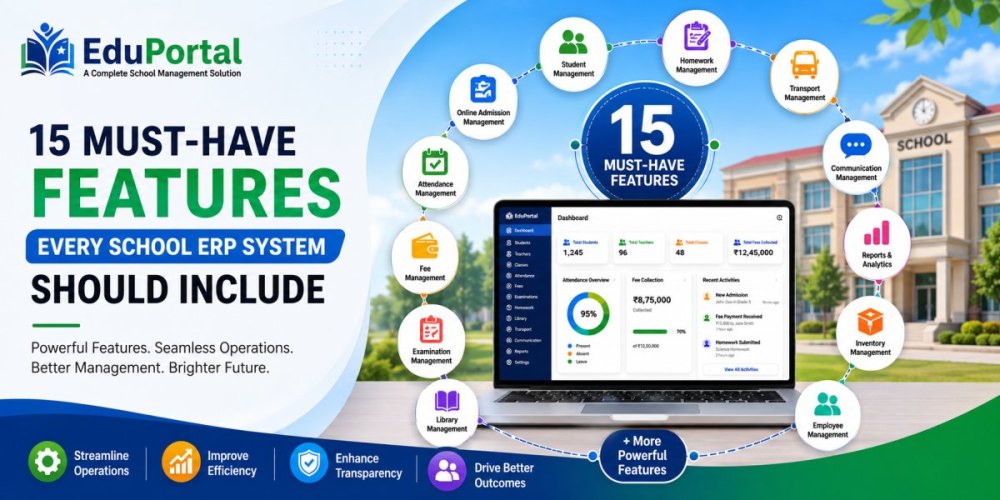
This guide explores the 15 most important School ERP Features that every educational institution should consider before investing in a school management system.
Why This Topic Matters in 2026
Technology has become a critical component of educational management.
Today's schools must meet growing expectations from:
-
Parents
-
Students
-
Teachers
-
Regulatory authorities
-
Educational boards
The shift toward digital-first operations means that schools need software capable of supporting every department efficiently.
Without the right ERP features, schools often face:
-
Inefficient workflows
-
Delayed communication
-
Data inaccuracies
-
Revenue leakage
-
Poor reporting capabilities
-
Limited scalability
Selecting the right ERP system is one of the most important decisions school leaders will make in 2026.
What Makes a Great School ERP System?
A School ERP should not simply store information.
It should:
-
Automate processes
-
Improve communication
-
Reduce manual work
-
Provide actionable insights
-
Support school growth
The following School ERP Features are considered essential for modern educational institutions.
15 Must-Have School ERP Features
1. Student Information Management
Every ERP system should provide a centralized student database.
This includes:
-
Personal details
-
Academic records
-
Admission information
-
Medical information
-
Attendance history
-
Fee records
A centralized profile eliminates duplicate data and improves administrative efficiency.
2. Online Admission Management
Admissions are often the first interaction families have with a school.
A modern ERP should support:
-
Online applications
-
Document uploads
-
Application tracking
-
Admission approvals
-
Automated communication
This creates a smoother experience for both parents and staff.
3. Smart Attendance Tracking
Attendance management is one of the most frequently used ERP functions.
Modern systems should support:
-
Digital attendance marking
-
Real-time monitoring
-
Automated reports
-
Parent notifications
This improves accuracy and reduces administrative workload.
4. Automated Fee Management
Fee collection directly impacts school finances.
An effective ERP should provide:
-
Fee scheduling
-
Invoice generation
-
Payment tracking
-
Reminder notifications
-
Financial reporting
Automation reduces errors and improves collection rates.
5. Examination Management
Managing examinations manually consumes significant time.
ERP systems should support:
-
Exam scheduling
-
Marks entry
-
Result generation
-
Grade calculations
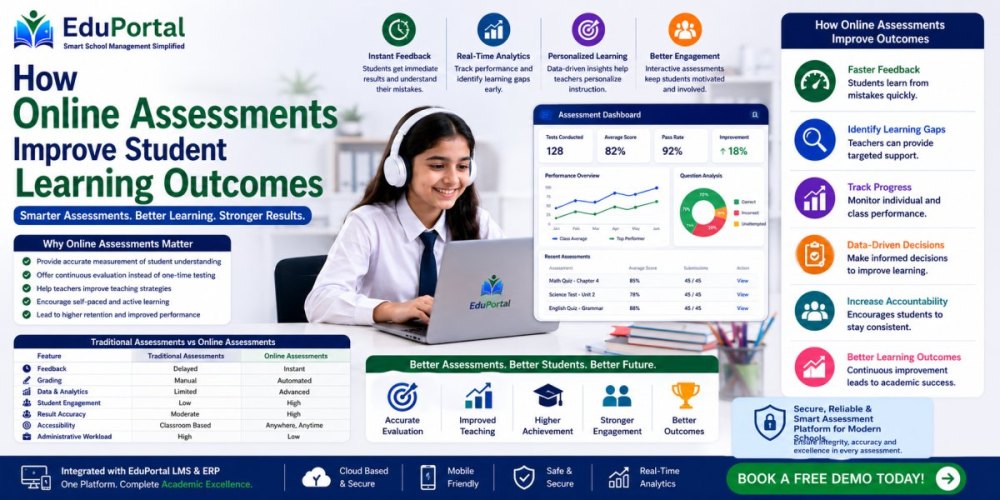
-
Performance analysis
6. Parent Communication Portal
Communication plays a major role in parent satisfaction.
The ERP should enable:
-
Announcements
-
Attendance alerts
-
Fee reminders
-
Academic updates
-
Event notifications
Real-time communication strengthens parent trust.
7. Teacher Management System
Teachers are at the heart of every institution.
ERP systems should help schools manage:
-
Staff profiles
-
Attendance
-
Work schedules
-
Performance records
-
Leave management
8. Mobile Application Access
In 2026, mobile accessibility is no longer optional.
Parents, teachers, and administrators expect access through smartphones.
Mobile applications improve convenience and engagement.
9. Timetable & Scheduling Management
Creating schedules manually can be challenging.
An ERP should support:
-
Class scheduling
-
Teacher assignments
-
Conflict detection
-
Timetable updates
10. Real-Time Reporting & Analytics
School leaders need data to make informed decisions.
The ERP should provide dashboards for:
-
Enrollment trends
-
Attendance analysis
-
Financial reports
-
Academic performance
Real-time insights enable proactive management.
11. Transport Management
For schools operating transportation services, transport management is critical.
Key features include:
-
Route planning
-
Vehicle tracking
-
Student transportation records
12. Multi-Campus Management
Educational groups often operate multiple branches.
A modern ERP should support centralized management of:
-
Campuses
-
Staff
-
Students
-
Finances
-
Reports
13. Library Management
Library automation improves resource tracking.
Features should include:
-
Book inventory
-
Borrowing records
-
Due date management
-
Fine calculations
14. Cloud-Based Accessibility
Cloud technology enables:
-
Anywhere access
-
Automatic updates
-
Better scalability
-
Reduced IT costs
Cloud-based ERP systems are becoming the industry standard.
15. Advanced Security & Data Protection
Schools handle sensitive information.
ERP systems should include:
-
Role-based permissions
-
Data encryption
-
Secure backups
-
Audit logs
Security should never be treated as an optional feature.
Comparison Table: Basic ERP vs Modern School ERP
| Feature | Basic ERP | Modern School ERP |
|---|---|---|
| Student Records | Limited | Comprehensive |
| Attendance | Manual Entry | Smart Tracking |
| Fee Management | Basic | Fully Automated |
| Parent Communication | Limited | Real-Time |
| Mobile App | No | Yes |
| Reporting | Standard Reports | Real-Time Analytics |
| Multi-Campus Support | Limited | Advanced |
| Cloud Access | Often Missing | Standard |
| Security Features | Basic | Enterprise-Level |
| Scalability | Limited | High |
Schools planning long-term growth should prioritize modern ERP capabilities rather than basic administrative software.
Real School Scenario
A private school with 2,000 students was using multiple disconnected systems.
Challenges
-
Attendance data stored separately
-
Manual fee tracking
-
Delayed communication with parents
-
Difficulty generating reports
Solution
The school implemented a comprehensive ERP with integrated attendance, finance, communication, and reporting modules.
Results
Within months:
-
Administrative workload decreased significantly
-
Parent satisfaction improved
-
Fee collection became more efficient
-
Reporting time was reduced dramatically
The school leadership gained greater visibility into daily operations.
Common Mistakes Schools Make
Choosing Software Based Only on Cost
The lowest-priced ERP may not provide the functionality needed for long-term success.
Ignoring Scalability
Schools often outgrow systems that cannot support increasing enrollment.
Focusing Only on Current Needs
Future growth should always be considered.
Overlooking Mobile Accessibility
Parents and teachers increasingly rely on mobile devices.
Neglecting Data Security
Protecting student and staff information should be a top priority.
Expert Recommendation
Small Schools
Prioritize:
-
Admissions
-
Attendance
-
Fee Management
-
Parent Communication
Medium-Sized Schools
Add:
-
Reporting
-
Examination Management
-
Staff Management
Large School Networks
Require:
-
Multi-campus support
-
Advanced analytics
-
Enterprise security
-
Cloud infrastructure
When evaluating ERP solutions, focus on operational efficiency, scalability, and user experience rather than simply comparing prices.
How EduPortal Solves This Problem
EduPortal is designed specifically for educational institutions seeking a complete school management solution.
Centralized Student Information
Manage all student records from a single platform.
Smart Attendance Tracking
Automate attendance and provide real-time visibility.
Fee Management Automation
Improve financial efficiency through automated workflows.
Parent Communication Tools
Keep parents informed through instant notifications.
Examination Management
Simplify result generation and academic reporting.
Mobile Accessibility
Access school information from anywhere.
Cloud-Based Infrastructure
Operate securely and efficiently through modern cloud technology.
Advanced Reporting
Generate actionable insights that support better decision-making.
Multi-Campus Management
Manage multiple branches from one centralized system.
EduPortal combines all critical School ERP Features into one integrated platform, helping schools reduce administrative burdens and focus on educational excellence.
Frequently Asked Questions
1. What are the most important School ERP Features?
Student management, attendance, fee management, examinations, communication, reporting, and security are among the most important features.
2. Why do schools need an ERP system?
ERP systems improve efficiency, reduce manual work, and centralize operations.
3. What is the purpose of attendance management?
Attendance management tracks student presence and generates accurate reports.
4. How does ERP improve fee collection?
Automation helps track payments, send reminders, and generate financial reports.
5. Is cloud-based ERP better?
Yes. Cloud ERP offers better accessibility, scalability, and maintenance.
6. Can small schools use ERP software?
Absolutely. Small schools can benefit from automation and improved organization.
7. What features improve parent communication?
Mobile apps, notifications, messaging systems, and parent portals.
8. How does ERP help administrators?
It reduces administrative workload and improves decision-making.
9. Can ERP manage multiple campuses?
Yes. Modern ERP systems support centralized multi-campus management.
10. How important is data security?
Very important. Schools handle sensitive information that must be protected.
11. Does ERP support mobile devices?
Most modern systems include mobile applications.
12. How does ERP improve reporting?
It provides real-time analytics and automated reports.
13. What should schools consider before choosing an ERP?
Scalability, functionality, usability, support, and security.
14. How long does implementation take?
Implementation varies based on school size and requirements.
15. Why choose EduPortal?
EduPortal offers a comprehensive, cloud-based solution with all essential School ERP Features needed by modern educational institutions.
Conclusion
Selecting the right School ERP is one of the most important technology decisions a school can make. The right system can streamline administration, improve communication, enhance reporting, strengthen financial management, and support long-term growth.
The 15 School ERP Features discussed in this guide represent the foundation of a modern, future-ready educational institution. Schools that invest in comprehensive ERP solutions position themselves to operate more efficiently, serve parents better, and adapt to changing educational demands.
Ready to Modernize Your School?
Discover how EduPortal can help your institution automate operations, improve efficiency, and deliver an exceptional educational experience.
Book your EduPortal demo today and explore the future of school management.