How Schools Can Improve Operational Efficiency: A Complete Guide for 2026
Quick Answer
School Operational Efficiency refers to a school's ability to manage its administrative, academic, financial, and communication processes effectively while minimizing wasted time, resources, and effort. Schools can improve operational efficiency by automating routine tasks, implementing School ERP software, digitizing admissions and fee collection, improving communication, using data analytics, and integrating systems across departments.
In 2026, operational efficiency is no longer just about reducing workload—it directly impacts student outcomes, parent satisfaction, staff productivity, and institutional growth. Schools that streamline operations can make faster decisions, improve service quality, reduce administrative costs, and focus more on education rather than paperwork. Modern school management systems have become essential tools for achieving sustainable efficiency and long-term success.
Introduction
Running a school involves far more than teaching students.
Behind every successful educational institution lies a complex network of operational activities that must work together efficiently.
Schools manage:
-
Student admissions
-
Attendance tracking
-
Fee collection
-
Academic records
-
Examinations
-
Parent communication
-
Staff management
-
Transportation
-
Reporting and compliance
When these processes are handled manually or through disconnected systems, inefficiencies quickly emerge.
Common challenges include:
-
Administrative delays
-
Data duplication
-
Communication gaps
-
Human errors
-
Increased operational costs
-
Poor visibility into school performance
As educational institutions grow and parent expectations increase, operational efficiency becomes a strategic priority.
Schools that optimize operations create better learning environments while reducing administrative burden.
Why This Topic Matters in 2026
Educational institutions face increasing pressure to deliver better outcomes while managing resources effectively.
Several trends are making operational efficiency more important than ever.
Rising Administrative Complexity
Schools manage more data and processes than ever before.
Growing Parent Expectations
Parents expect faster communication and digital services.
Multi-Campus Expansion
Educational networks require centralized management systems.
School Automation Trends
Technology adoption is transforming educational administration.
Data-Driven Decision Making
School leaders need real-time insights to improve performance.
These factors make School Operational Efficiency a critical success factor in 2026.
What Is School Operational Efficiency?
School Operational Efficiency refers to how effectively a school uses its resources, processes, staff, and technology to achieve educational and administrative goals.
An efficient school:
-
Minimizes manual work
-
Reduces errors
-
Improves communication
-
Saves time
-
Optimizes resources
-
Delivers better services
Operational efficiency enables school leaders to focus on educational quality instead of administrative challenges.
Traditional School Operations vs Efficient Digital Operations
| Feature | Traditional Operations | Efficient Digital Operations |
|---|---|---|
| Admissions | Paper-Based | Online & Automated |
| Attendance | Manual Registers | Real-Time Digital Tracking |
| Fee Collection | Manual Processing | Automated Payments |
| Communication | Notices & Calls | Instant Notifications |
| Reporting | Time-Consuming | Real-Time Reports |
| Data Access | Fragmented | Centralized |
| Decision Making | Reactive | Data-Driven |
| Scalability | Limited | High |
The difference becomes increasingly significant as schools grow.
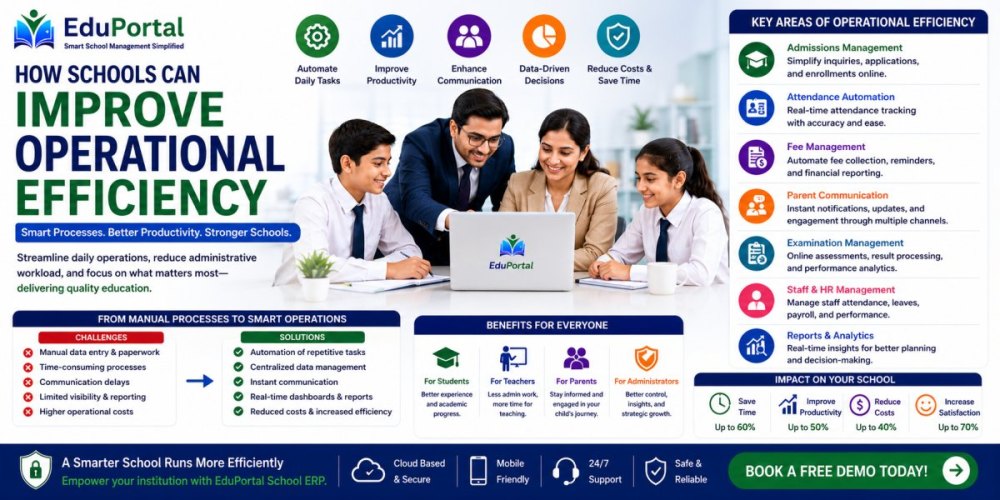
Key Areas Where Schools Can Improve Operational Efficiency
Admissions Management
Admissions are often the first interaction parents have with a school.
Manual admission processes create delays and frustration.
Improvements
-
Online application forms
-
Digital document submission
-
Automated admission tracking
-
Online inquiry management
Benefits include faster processing and better parent experiences.
Attendance Management
Manual attendance tracking consumes valuable classroom time.
Modern Solutions
-
Face recognition attendance
-
RFID systems
-
Mobile attendance apps
-
Automated reporting
Benefits include greater accuracy and real-time visibility.
Fee Management
Fee collection is one of the most resource-intensive administrative functions.
Efficiency Strategies
-
Digital payments
-
Automated reminders
-
Online fee portals
-
Instant receipts
Benefits include improved cash flow and reduced outstanding balances.
Parent Communication
Communication delays often create misunderstandings and dissatisfaction.
Efficient Communication Tools
-
Mobile apps
-
SMS alerts
-
WhatsApp integration
-
Parent portals
Benefits include stronger engagement and transparency.
Examination Management
Traditional examination processes require extensive administrative effort.
Digital Alternatives
-
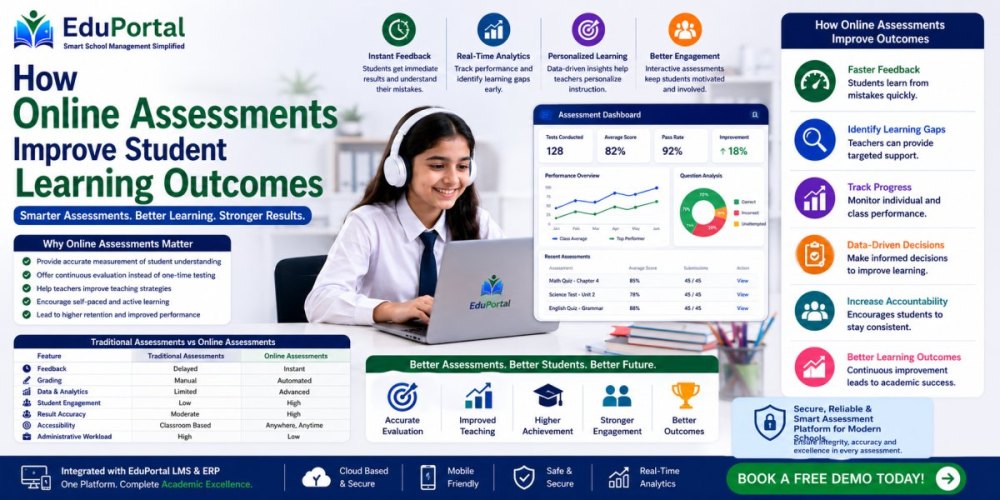
Online assessments
-
Automated grading
-
Digital report cards
-
Performance analytics
Benefits include faster evaluation and better academic insights.
Staff Management
Managing teachers and support staff manually creates inefficiencies.
Solutions
-
HR management systems
-
Leave management automation
-
Payroll integration
-
Performance tracking
Benefits include improved workforce management.
How Technology Improves School Operational Efficiency
Centralized Information Management
Data is stored in one system.
Benefits:
-
Faster access
-
Better accuracy
-
Reduced duplication
Process Automation
Automation eliminates repetitive administrative tasks.
Examples:
-
Attendance recording
-
Fee reminders
-
Report generation
Real-Time Reporting
Administrators gain instant access to operational data.
Improved Collaboration
Departments can work together more effectively.
Better Resource Utilization
Schools can allocate resources based on actual needs.
Real School Scenario
A school network with 5 campuses and 8,000 students faced operational challenges.
Problems
-
Manual attendance tracking
-
Fee collection delays
-
Parent communication gaps
-
Reporting inefficiencies
Solution
The institution implemented an integrated School ERP system.
Results After One Year
-
Administrative workload reduced significantly
-
Fee collection rates improved
-
Parent satisfaction increased
-
Attendance accuracy improved
-
Reporting became real-time
The school achieved measurable operational improvements across all campuses.
Benefits of Improving School Operational Efficiency
Better Student Experiences
Students benefit from smoother academic processes.
Higher Parent Satisfaction
Efficient schools provide better communication and services.
Increased Staff Productivity
Employees spend less time on repetitive tasks.
Reduced Costs
Automation lowers operational expenses.
Faster Decision Making
Real-time data supports informed leadership decisions.
Greater Scalability
Efficient processes support institutional growth.
Improved Educational Outcomes
Teachers can focus more on instruction.
Common Mistakes Schools Make
Relying Too Heavily on Manual Processes
Manual systems create bottlenecks and errors.
Using Multiple Disconnected Systems
Data silos reduce efficiency.
Delaying Digital Transformation
Schools that delay technology adoption often fall behind.
Ignoring Staff Training
Technology adoption requires proper onboarding.
Focusing Only on Cost
Long-term value should be prioritized over short-term savings.
Expert Recommendation
Small Schools
Start with:
-
Digital attendance
-
Online fee collection
-
Parent communication tools
Medium Schools
Implement:
-
School ERP software
-
Reporting dashboards
-
Online admissions
Large Educational Institutions
Adopt:
-
Full automation
-
Multi-campus management
-
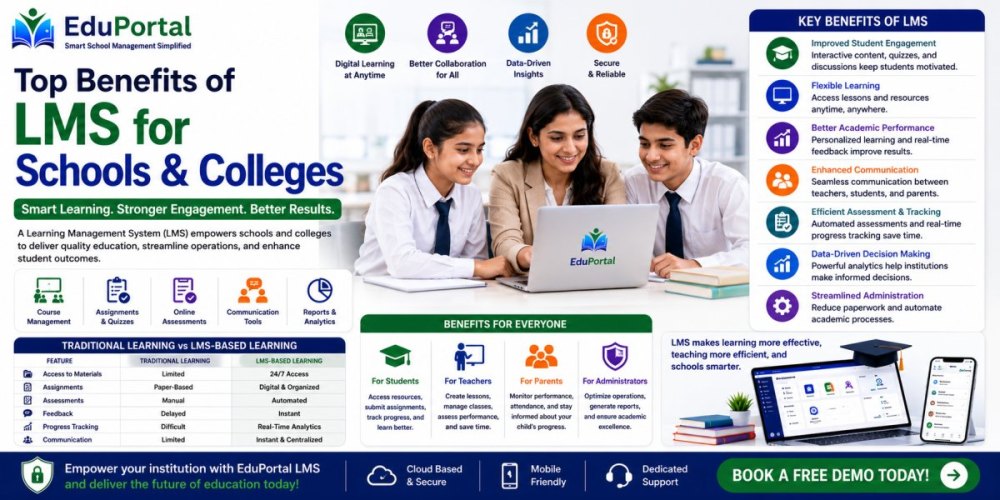
Learning Management Systems
-
Advanced analytics
The most successful schools view operational efficiency as an ongoing improvement strategy rather than a one-time project.
How EduPortal Solves This Problem
EduPortal is designed to help schools achieve maximum operational efficiency through a fully integrated School ERP platform.
Admissions Management
Digitize and streamline enrollment processes.
Attendance Automation
Support face recognition, RFID, and mobile attendance systems.
Fee Management
Automate collections, reminders, and financial reporting.
Parent Communication
Improve engagement through mobile apps, SMS, and notifications.
Examination & LMS Integration
Manage assessments, grading, and learning activities efficiently.
HR & Staff Management
Simplify workforce administration.
Real-Time Analytics
Monitor performance across departments.
Multi-Campus Management
Manage multiple branches through a centralized platform.
EduPortal helps schools eliminate inefficiencies and create smarter operations.
Frequently Asked Questions
1. What is School Operational Efficiency?
It is the ability of a school to manage resources and processes effectively.
2. Why is operational efficiency important?
It improves productivity, service quality, and educational outcomes.
3. How can schools improve operational efficiency?
Through automation, digital systems, and process optimization.
4. What role does School ERP software play?
ERP systems centralize and automate school operations.
5. Can operational efficiency reduce costs?
Yes. Automation minimizes administrative expenses.
6. How does attendance automation improve efficiency?
It reduces manual work and improves accuracy.
7. Can digital fee collection improve operations?
Yes. It simplifies payments and reduces workload.
8. How does parent communication affect efficiency?
Effective communication reduces misunderstandings and administrative follow-ups.
9. Is operational efficiency important for small schools?
Absolutely. Schools of all sizes benefit.
10. How do real-time reports help administrators?
They support faster and better decision making.
11. Can schools improve efficiency without technology?
Limited improvements are possible, but technology significantly accelerates results.
12. What is the biggest operational challenge schools face?
Managing multiple processes manually.
13. How does automation improve productivity?
It reduces repetitive tasks and administrative burden.
14. What is the best first step toward efficiency?
Implementing an integrated School ERP platform.
15. Why choose EduPortal?
EduPortal provides comprehensive automation, reporting, communication, and management tools designed specifically for schools.
Conclusion
Improving School Operational Efficiency is no longer optional for educational institutions that want to thrive in a competitive and technology-driven environment.
By streamlining admissions, attendance, fee collection, communication, assessments, and reporting, schools can reduce administrative burden while improving educational quality and stakeholder satisfaction.
The most successful schools in 2026 are those that embrace automation, leverage data, and build integrated digital ecosystems that support both operational excellence and student success.
Ready to Improve School Operations?
Discover how EduPortal can help your institution automate processes, improve productivity, strengthen parent engagement, and achieve operational excellence.
Book an EduPortal demo today and transform the way your school operates.