What is a Learning Management System (LMS) for Schools? Complete Guide for 2026
Quick Answer
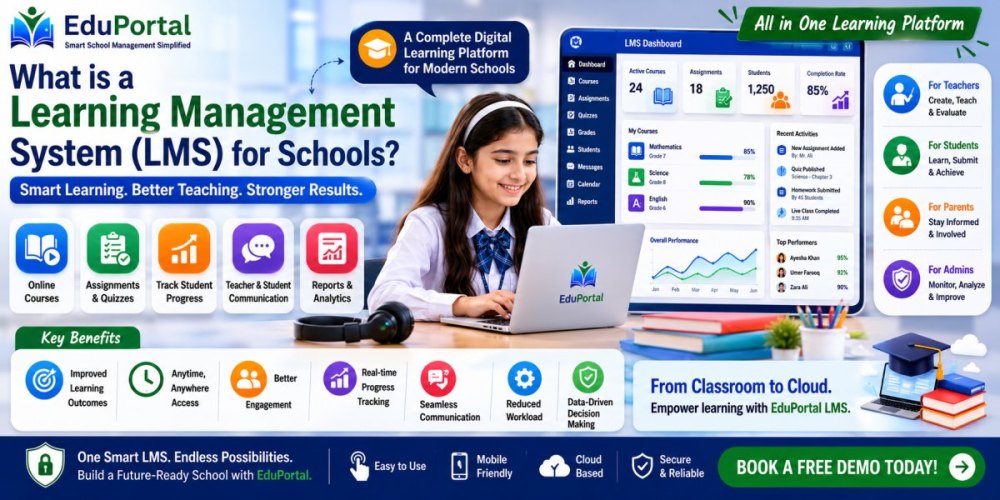
A Learning Management System for Schools (LMS) is a digital platform that helps schools manage, deliver, track, and improve teaching and learning activities. It enables teachers to create online classes, share learning materials, assign homework, conduct assessments, track student progress, and communicate with students and parents through a centralized system.
In 2026, a Learning Management System is no longer limited to online education. Modern schools use LMS platforms to support blended learning, improve academic performance, increase student engagement, and simplify educational administration. When integrated with a School ERP system, an LMS creates a complete digital learning ecosystem that helps schools provide a more personalized, efficient, and future-ready educational experience.
Introduction
Education has changed dramatically over the past decade.
Technology is no longer an optional classroom enhancement—it has become a core component of modern teaching and learning.
Students today expect interactive learning experiences, instant access to educational content, and digital communication.
Parents want greater visibility into academic progress.
Teachers need tools that help them manage lessons, assignments, assessments, and student performance more efficiently.
As schools adapt to these evolving expectations, one technology has emerged as a critical part of modern education:
The Learning Management System (LMS).
An LMS helps schools organize and deliver education digitally while supporting both classroom-based and remote learning environments.
For school owners, principals, and administrators, understanding the role of an LMS is essential for building a future-ready educational institution.
Why This Topic Matters in 2026
Educational technology adoption continues to accelerate globally.
Several trends make LMS platforms increasingly important.
Blended Learning is Becoming Standard
Schools are combining traditional classroom teaching with digital learning experiences.
Student Expectations Are Evolving
Modern learners expect flexible and interactive educational experiences.
Increased Focus on Personalized Learning
Schools are using technology to support individual student needs.
Data-Driven Education
Educational decisions increasingly rely on performance analytics and learning insights.
Parent Engagement Requirements
Parents want greater access to academic information.
These factors are driving widespread LMS adoption in schools.
What is a Learning Management System for Schools?
A Learning Management System for Schools is software designed to manage teaching and learning activities digitally.
The platform serves as a centralized hub where educators, students, administrators, and parents can access academic information and resources.
Core Functions of an LMS
-
Course management
-
Assignment distribution
-
Online assessments
-
Learning content delivery
-
Progress tracking
-
Communication
-
Reporting and analytics
The LMS becomes the digital classroom for modern schools.
How Does an LMS Work?
An LMS connects teachers, students, and administrators through a centralized platform.
Teachers Can
-
Upload lessons
-
Share learning materials
-
Assign homework
-
Conduct quizzes
-
Monitor progress
Students Can
-
Access learning resources
-
Submit assignments
-
Take assessments
-
View grades
-
Communicate with teachers
Administrators Can
-
Monitor academic performance
-
Generate reports
-
Track engagement
-
Manage courses
Parents Can
-
View progress reports
-
Monitor assignments
-
Track academic performance
This creates a connected educational ecosystem.
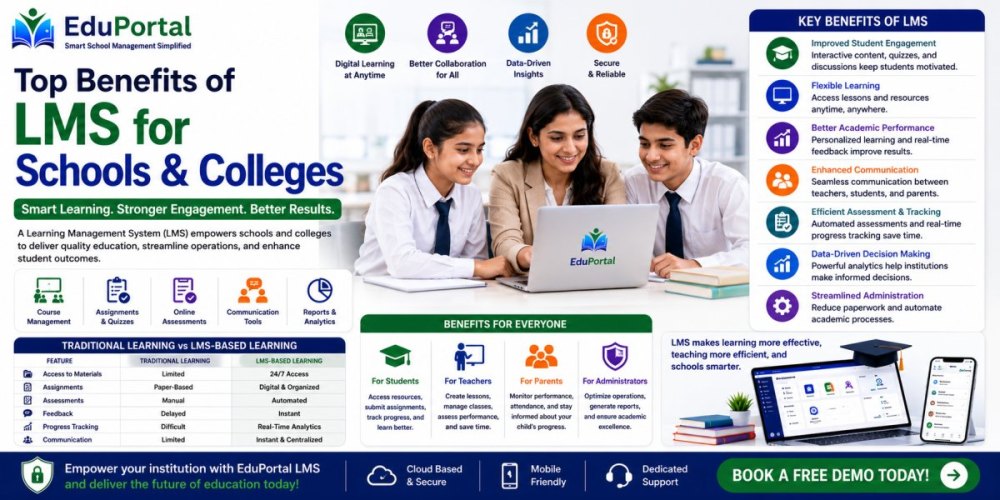
Traditional Learning vs LMS-Based Learning
| Feature | Traditional Learning | LMS-Based Learning |
|---|---|---|
| Access to Learning Materials | Classroom Only | Anytime, Anywhere |
| Assignment Submission | Physical | Digital |
| Progress Tracking | Manual | Automated |
| Communication | Limited | Real-Time |
| Reporting | Time-Consuming | Instant |
| Student Engagement | Moderate | High |
| Learning Flexibility | Low | High |
| Analytics | Limited | Advanced |
The LMS enhances traditional learning rather than replacing it.
Key Features of a Learning Management System for Schools
Course Management
Teachers can organize educational content into structured courses.
Benefits
-
Better organization
-
Consistent learning delivery
-
Improved accessibility
Assignment Management
Teachers can distribute and collect assignments digitally.
Benefits
-
Faster submission
-
Easier grading
-
Improved accountability
Online Assessments
Conduct quizzes, tests, and examinations digitally.
Benefits
-
Automated grading
-
Immediate feedback
-
Reduced workload
Learning Content Repository
Store and organize educational resources.
Examples
-
Videos
-
Documents
-
Presentations
-
Interactive content
Student Progress Tracking
Monitor academic performance in real time.
Benefits
-
Early intervention
-
Personalized support
-
Better outcomes
Communication Tools
Enable communication between:
-
Teachers
-
Students
-
Parents
-
Administrators
Mobile Accessibility
Support learning through smartphones and tablets.
Reporting and Analytics
Generate detailed educational insights.
Benefits of LMS for Schools
Improved Student Engagement
Interactive content increases participation and motivation.
Enhanced Learning Outcomes
Students receive continuous access to learning resources.
Greater Teaching Efficiency
Teachers spend less time on administrative tasks.
Personalized Learning Experiences
Learning can be adapted to individual student needs.
Better Parent Involvement
Parents gain visibility into academic progress.
Increased Academic Transparency
Performance data becomes accessible and actionable.
Reduced Administrative Burden
Automation simplifies educational management.
Future-Ready Education
Students develop digital literacy skills.
Real School Scenario
A secondary school with 2,800 students wanted to modernize its teaching approach.
Challenges
-
Limited access to learning resources
-
Inconsistent assignment tracking
-
Delayed performance reporting
-
Low parent visibility
Solution
The school implemented a Learning Management System integrated with its School ERP platform.
Results Within One Academic Year
-
Student engagement improved
-
Assignment completion rates increased
-
Parent participation increased
-
Teacher workload decreased
-
Academic performance monitoring became more effective
The school successfully transitioned to a blended learning environment.
LMS vs School ERP: What's the Difference?
Many school leaders confuse LMS and School ERP systems.
| LMS | School ERP |
|---|---|
| Focuses on Learning | Focuses on Administration |
| Manages Courses | Manages Operations |
| Assignments & Assessments | Admissions & Fees |
| Learning Analytics | Administrative Analytics |
| Student Engagement | School Management |
| Academic Delivery | Operational Efficiency |
The most effective schools use both systems together.
Challenges Schools Face When Implementing LMS
Resistance to Change
Teachers may need support and training.
Content Development Requirements
Digital learning resources must be prepared.
Technology Infrastructure
Reliable internet access is important.
User Adoption
Students and parents require onboarding.
Common Mistakes Schools Make
Choosing LMS Based Only on Price
Functionality and scalability matter more.
Ignoring Teacher Training
Successful implementation depends on user confidence.
Using LMS Without Clear Goals
Schools should define learning objectives first.
Failing to Engage Parents
Parent participation improves LMS effectiveness.
Not Integrating LMS with School ERP
Disconnected systems reduce efficiency.
Expert Recommendation
Small Schools
Start with:
-
Assignment management
-
Content sharing
-
Parent communication
Medium Schools
Add:
-
Online assessments
-
Learning analytics
-
Mobile accessibility
Large Educational Networks
Implement:
-
Full LMS integration
-
Personalized learning tools
-
Advanced reporting
-
Multi-campus learning management
Schools achieve the greatest value when LMS adoption aligns with broader digital transformation goals.
How EduPortal Solves This Problem
EduPortal provides a powerful Learning Management System for Schools integrated with comprehensive school management tools.
Digital Learning Platform
Deliver courses, assignments, and assessments online.
Student Progress Tracking
Monitor academic performance in real time.
Teacher Management Tools
Simplify content delivery and grading.
Parent Engagement
Keep parents informed about academic progress.
Mobile Accessibility
Support learning anytime and anywhere.
Analytics & Reporting
Generate actionable academic insights.
School ERP Integration
Connect learning management with attendance, fees, admissions, examinations, and communication.
Multi-Campus Support
Manage learning across multiple branches.
EduPortal helps schools create a complete digital learning ecosystem.
Frequently Asked Questions
1. What is a Learning Management System for Schools?
An LMS is a digital platform used to manage and deliver educational content and learning activities.
2. Why do schools need an LMS?
To improve teaching, learning, communication, and academic management.
3. Can LMS improve student performance?
Yes. It supports engagement, accessibility, and personalized learning.
4. What is the difference between LMS and School ERP?
LMS manages learning, while ERP manages school operations.
5. Can parents access LMS platforms?
Many LMS solutions include parent access features.
6. Is LMS suitable for small schools?
Yes. Schools of all sizes can benefit.
7. Can students access LMS from mobile devices?
Yes. Modern LMS platforms support smartphones and tablets.
8. Does LMS support online assessments?
Absolutely.
9. Can LMS help teachers save time?
Yes. Automation simplifies many academic tasks.
10. What content can schools upload?
Videos, PDFs, presentations, assignments, and more.
11. Can LMS support blended learning?
Yes. It is ideal for blended learning environments.
12. Does LMS provide performance analytics?
Yes. Analytics is one of its most valuable features.
13. Can LMS integrate with School ERP software?
Yes. Integration improves efficiency and data consistency.
14. How long does LMS implementation take?
Implementation timelines vary depending on school size and requirements.
15. Why choose EduPortal?
EduPortal combines LMS functionality with complete school management capabilities in one integrated platform.
Conclusion
A Learning Management System for Schools is no longer a luxury—it is a fundamental component of modern education.
By providing centralized access to learning resources, assignments, assessments, communication, and performance data, an LMS helps schools improve educational outcomes while preparing students for a digital future.
Schools that invest in LMS technology gain stronger student engagement, better academic visibility, improved teaching efficiency, and greater parent involvement.
As education continues evolving in 2026 and beyond, LMS platforms will remain at the center of successful digital learning strategies.
Ready to Build a Smarter Learning Environment?
Discover how EduPortal can help your school implement a powerful Learning Management System integrated with complete School ERP functionality.
Book an EduPortal demo today and transform learning for students, teachers, and parents.