Future of Smart Schools in Pakistan: What Educational Leaders Need to Know in 2026
Quick Answer
The future of Smart Schools in Pakistan is centered around technology-driven education, data-powered decision-making, AI-assisted learning, cloud-based school management, and stronger parent-school collaboration. Smart schools use digital tools such as School ERP systems, interactive classrooms, learning analytics, mobile applications, and automation technologies to improve both educational outcomes and operational efficiency.
In 2026, smart schools are no longer a futuristic concept. They are rapidly becoming the standard for educational excellence. Schools that invest in digital transformation are better equipped to improve student engagement, streamline administration, enhance communication, and prepare learners for a technology-driven world. For school owners, principals, and administrators, understanding the future of smart schools is essential for long-term growth and competitiveness.
Introduction
Education is changing faster than at any point in history.
Across Pakistan, educational institutions are experiencing increasing pressure to modernize their operations, improve learning experiences, and meet evolving parent expectations.
Traditional school models that rely heavily on paperwork, manual processes, and limited technology are becoming increasingly difficult to sustain.
At the same time, technological advancements are creating new opportunities.
Artificial Intelligence, cloud computing, data analytics, mobile applications, and digital learning platforms are transforming how schools operate and how students learn.
These innovations are giving rise to a new educational model known as the Smart School.
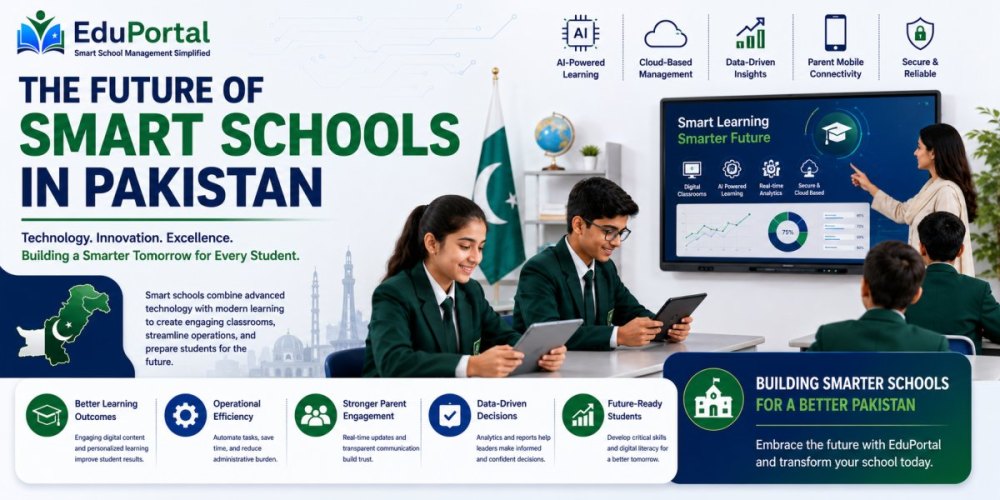
A smart school combines modern teaching methodologies with advanced technology to create a more efficient, engaging, and data-driven educational environment.
For school leaders planning for the future, understanding the evolution of Smart Schools in Pakistan is critical.
This guide explores the trends, opportunities, and technologies that will shape the next generation of education.
Why This Topic Matters in 2026
The education sector in Pakistan is entering a new phase of digital transformation.
Several factors are driving this shift.
Increasing Parent Expectations
Parents want greater transparency, communication, and convenience.
They expect:
-
Real-time updates
-
Mobile access
-
Online services
-
Digital communication
Rapid Technological Advancement
Educational technology is evolving rapidly.
Schools that adapt early gain significant advantages.
Growing Competition
Educational institutions increasingly compete based on quality, innovation, and parent experience.
Student Readiness for the Future
Modern careers require digital literacy and technology skills.
Schools must prepare students accordingly.
Operational Efficiency Requirements
Technology helps schools manage growing administrative demands.
These trends are making smart schools increasingly important across Pakistan.
What Is a Smart School?
A smart school uses technology strategically to improve learning, administration, communication, and decision-making.
Technology becomes integrated into every aspect of school operations.
Core Components of Smart Schools
-
Digital classrooms
-
School ERP systems
-
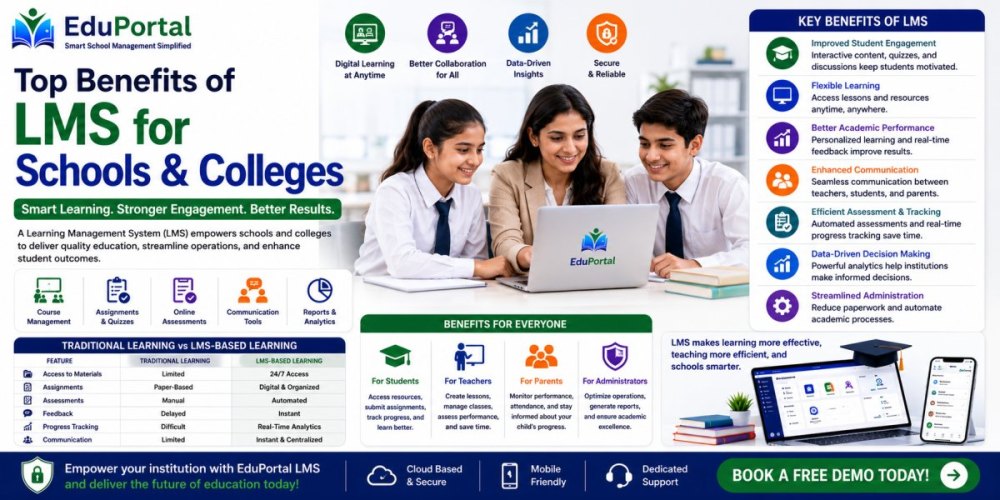
Learning management systems
-
Parent mobile apps
-
Attendance automation
-
Data analytics
-
Cloud infrastructure
-
AI-powered learning tools
The goal is to create a connected educational ecosystem.
Traditional Schools vs Smart Schools
| Area | Traditional Schools | Smart Schools |
|---|---|---|
| Attendance | Manual Registers | Automated Tracking |
| Communication | Circulars & Calls | Mobile Apps & Notifications |
| Learning Resources | Printed Materials | Interactive Digital Content |
| Fee Collection | Manual Payments | Online Payments |
| Reporting | Manual Compilation | Real-Time Analytics |
| Student Records | Physical Files | Centralized Database |
| Decision Making | Historical Data | Live Insights |
| Accessibility | School Premises Only | Anywhere Access |
The difference extends beyond technology—it transforms the entire educational experience.
Major Trends Shaping the Future of Smart Schools in Pakistan
Artificial Intelligence in Education
AI is becoming one of the most influential technologies in education.
Future applications include:
Personalized Learning
AI can adapt learning content based on student performance.
Intelligent Tutoring
Students receive customized academic support.
Performance Prediction
Schools can identify learning challenges early.
AI will increasingly support both students and educators.
Cloud-Based School Management
Cloud technology allows schools to manage operations from anywhere.
Benefits include:
-
Centralized management
-
Remote access
-
Automatic backups
-
Scalability
Most modern smart schools are adopting cloud-based infrastructure.
Data-Driven Decision Making
School leaders are moving from intuition-based decisions to evidence-based management.
Analytics help administrators monitor:
-
Attendance trends
-
Academic performance
-
Enrollment growth
-
Fee collection
-
Parent engagement
Data is becoming one of the most valuable educational assets.
Smart Classrooms
Classrooms are becoming more interactive and engaging.
Technologies include:
-
Interactive displays
-
Digital content platforms
-
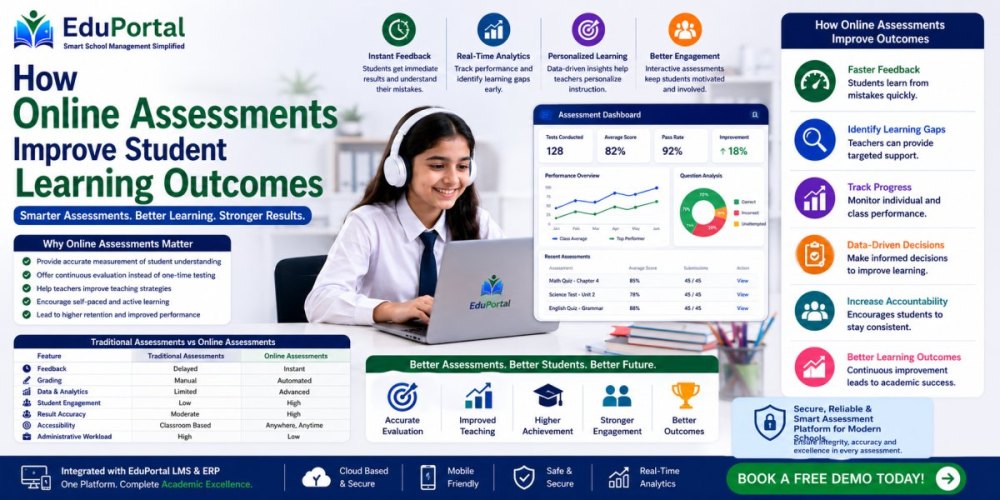
Online assessments
-
Virtual collaboration tools
These tools improve learning experiences.
Mobile-First Parent Engagement
Parents increasingly expect communication through smartphones.
Smart schools use mobile applications to provide:
-
Attendance updates
-
Fee reminders
-
Academic reports
-
School announcements
This improves transparency and trust.
School Automation
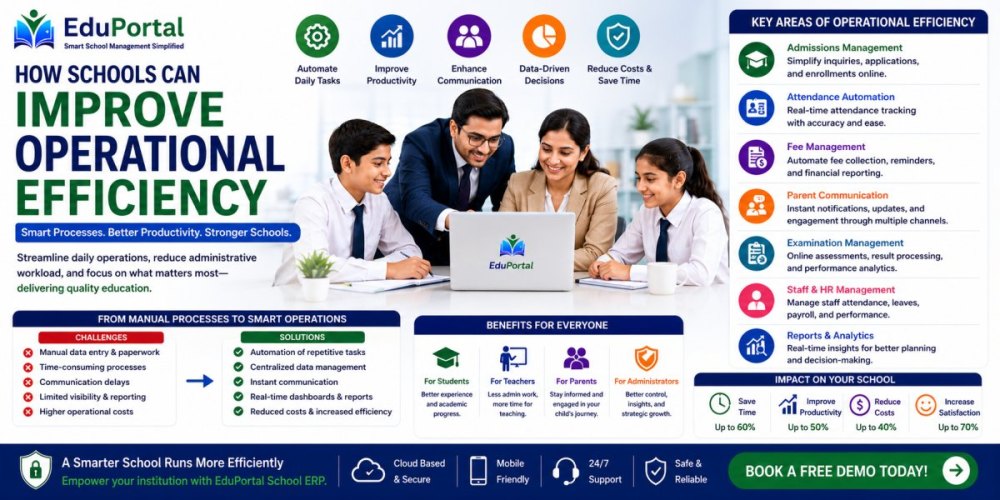
Automation is reducing administrative workload significantly.
Common areas include:
-
Admissions
-
Attendance
-
Fee collection
-
Examination management
-
Reporting
Automation allows schools to focus more on education.
Key Benefits of Smart Schools
Improved Student Outcomes
Technology supports personalized learning and greater engagement.
Better Administrative Efficiency
Automation reduces repetitive tasks.
Enhanced Parent Satisfaction
Transparent communication improves trust.
Stronger Decision Making
Real-time data enables better planning.
Increased Competitiveness
Modern schools attract more families.
Scalability for Growth
Technology supports expansion without increasing complexity.
Real School Scenario
A growing private school network in Pakistan wanted to improve operational efficiency and parent engagement.
Challenges
-
Manual attendance systems
-
Paper-based communication
-
Delayed reporting
-
Administrative overload
Solution
The institution implemented a smart school ecosystem including:
-
School ERP software
-
Parent mobile applications
-
Attendance automation
-
Analytics dashboards
Results
Within one academic year:
-
Parent engagement increased significantly
-
Administrative workload decreased
-
Attendance accuracy improved
-
Reporting became real-time
-
Leadership gained actionable insights
The school successfully transitioned toward a smart school model.
Technologies Every Future Smart School Should Adopt
School ERP System
The foundation of smart school management.
Parent Mobile Application
Strengthens communication and transparency.
Learning Management System (LMS)
Supports digital learning and content delivery.
Smart Attendance System
Improves accuracy and accountability.
Online Fee Management
Enhances financial operations.
Data Analytics Dashboard
Supports informed decision-making.
Cloud Infrastructure
Provides accessibility and scalability.
AI-Powered Learning Tools
Creates personalized educational experiences.
Common Mistakes Schools Make
Treating Technology as an Expense
Technology should be viewed as a strategic investment.
Delaying Digital Transformation
Late adoption often increases future costs.
Implementing Disconnected Systems
Integrated platforms deliver better results.
Ignoring Staff Training
Technology adoption requires user readiness.
Focusing Only on Hardware
True smart schools require process transformation, not just devices.
Expert Recommendation
Small Schools
Start with:
-
School ERP
-
Parent communication tools
-
Attendance automation
Medium Schools
Add:
-
Analytics
-
Online admissions
-
Fee automation
Large Educational Groups
Invest in:
-
AI-powered insights
-
Multi-campus management
-
Cloud infrastructure
-
Advanced reporting
The most successful smart schools adopt technology strategically and gradually.
How EduPortal Solves This Problem
EduPortal provides a comprehensive platform designed for the future of smart schools.
Complete School Automation
Manage admissions, attendance, examinations, fees, and communication from one platform.
Parent Mobile App
Keep families connected through real-time updates.
Smart Attendance Tracking
Improve monitoring and reporting accuracy.
Advanced Analytics
Transform school data into actionable insights.
Multi-Campus Management
Manage multiple branches efficiently.
Cloud-Based Access
Operate securely from anywhere.
School Fee Management
Improve collections and financial transparency.
Scalable Infrastructure
Support growth without operational complexity.
EduPortal helps schools build a strong foundation for the future of education.
Frequently Asked Questions
1. What is a Smart School?
A Smart School uses technology to improve teaching, administration, communication, and decision-making.
2. Why are Smart Schools important in Pakistan?
They improve educational quality, operational efficiency, and parent engagement.
3. What technologies define a Smart School?
School ERP systems, AI, analytics, cloud computing, and mobile applications.
4. Can Smart Schools improve student performance?
Yes. Technology supports personalized learning and better interventions.
5. How does AI help schools?
AI enables personalized learning, analytics, and predictive insights.
6. What role does cloud technology play?
Cloud systems provide accessibility, scalability, and centralized management.
7. Are Smart Schools suitable for small institutions?
Absolutely. Schools of all sizes can adopt smart technologies.
8. How do Smart Schools improve communication?
Through mobile apps, notifications, and real-time information sharing.
9. What is School Automation?
The use of technology to automate administrative and academic processes.
10. How do Smart Schools manage attendance?
Using automated attendance systems and real-time reporting.
11. Can Smart Schools improve fee collection?
Yes. Online payment systems and automation improve efficiency.
12. What are the biggest challenges of becoming a Smart School?
Technology adoption, training, and selecting the right solutions.
13. How can schools start their smart school journey?
Begin with ERP systems, communication tools, and automation.
14. What is the future of Smart Schools in Pakistan?
Greater use of AI, analytics, automation, and personalized learning.
15. Why choose EduPortal?
EduPortal provides the tools schools need to successfully become smart schools.
Conclusion
The future of Smart Schools in Pakistan is being shaped by technology, automation, data, and innovation. Educational institutions that embrace digital transformation today will be better positioned to improve learning outcomes, strengthen parent relationships, streamline administration, and remain competitive in an increasingly technology-driven environment.
Smart schools are not simply about using technology—they are about creating better educational experiences, smarter decision-making processes, and more efficient operations.
As Pakistan's education sector continues evolving in 2026 and beyond, smart schools will become the benchmark for educational excellence.
Ready to Build a Smart School?
Discover how EduPortal can help your institution embrace digital transformation, automate operations, and create a future-ready learning environment.
Book an EduPortal demo today and take the first step toward becoming a smart school.