Paperless Schools: Benefits of Going Digital in 2026
Quick Answer
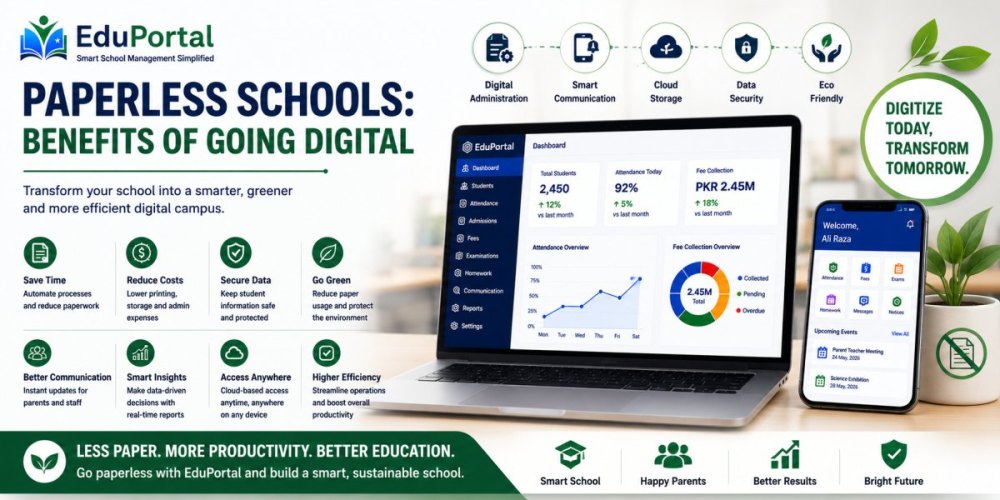
Paperless Schools use digital technologies to replace traditional paper-based processes for admissions, attendance, communication, fee management, examinations, reporting, and academic administration. Instead of relying on physical documents, registers, forms, and filing cabinets, schools manage information through centralized digital platforms such as School ERP systems, cloud-based databases, mobile applications, and online portals.
In 2026, becoming a paperless school is no longer simply about reducing paper consumption. It is about improving efficiency, lowering operational costs, enhancing communication, increasing data security, and creating better learning experiences. Schools that embrace digital transformation can streamline administration, improve parent engagement, support data-driven decision-making, and build a future-ready educational environment.
Introduction
Walk into many schools today, and you will still find stacks of admission forms, attendance registers, fee receipts, report cards, circulars, and filing cabinets filled with years of records.
While these traditional methods have been used for decades, they create challenges that modern schools can no longer ignore.
Paper-based systems are often:
-
Time-consuming
-
Expensive to maintain
-
Difficult to organize
-
Vulnerable to loss and damage
-
Inefficient for growing institutions
At the same time, parents, students, and administrators increasingly expect fast access to information, digital communication, and automated services.
This shift is driving schools worldwide toward a paperless future.
A paperless school uses digital technology to manage academic and administrative processes efficiently while reducing dependence on physical paperwork.
For school owners, principals, and administrators, understanding the benefits of becoming a paperless school is critical for long-term success.
Why This Topic Matters in 2026
Education is becoming increasingly digital.
Several factors are accelerating the transition toward Paperless Schools.
Growing Administrative Workloads
Schools manage more students, records, and compliance requirements than ever before.
Digital systems reduce this burden.
Rising Parent Expectations
Parents expect:
-
Online access to information
-
Instant notifications
-
Digital fee payments
-
Mobile communication
Environmental Responsibility
Schools are increasingly adopting sustainable practices.
Reducing paper consumption supports environmental goals.
Cost Optimization
Printing, storage, and document management create ongoing expenses.
Digital systems reduce operational costs.
Remote Accessibility
Administrators, teachers, and parents require access to information from anywhere.
Paperless systems support this flexibility.
What Is a Paperless School?
A Paperless School is an educational institution that uses digital technology to manage administrative and academic operations without relying heavily on physical documents.
Key processes become digitized.
Common Areas of Digital Transformation
-
Admissions
-
Attendance
-
Student records
-
Fee management
-
Examinations
-
Communication
-
Reporting
-
Document storage
The objective is to improve efficiency while creating a more sustainable and connected educational environment.
Traditional Schools vs Paperless Schools
| Area | Traditional Schools | Paperless Schools |
|---|---|---|
| Admissions | Paper Forms | Online Applications |
| Attendance | Registers | Digital Tracking |
| Fee Collection | Printed Receipts | Online Payments |
| Student Records | Filing Cabinets | Centralized Database |
| Communication | Printed Circulars | Mobile Notifications |
| Reporting | Manual Compilation | Automated Reports |
| Document Storage | Physical Archives | Cloud Storage |
| Accessibility | Office-Based | Anywhere Access |
The benefits become increasingly significant as schools grow.
Major Benefits of Going Digital
Improved Administrative Efficiency
One of the biggest advantages of Paperless Schools is efficiency.
Administrative teams spend less time handling paperwork and more time focusing on meaningful tasks.
Examples
-
Automated attendance
-
Online admissions
-
Digital report generation
-
Electronic document management
This reduces workload significantly.
Lower Operational Costs
Many schools underestimate how much they spend on paper.
Expenses include:
-
Printing
-
Photocopying
-
Storage
-
Filing supplies
Digital systems help reduce these recurring costs.
Better Data Security
Paper documents can be:
-
Lost
-
Damaged
-
Misplaced
-
Stolen
Digital systems provide:
-
Backups
-
Access controls
-
Encryption
-
Audit trails
This improves information security.
Faster Access to Information
Finding a physical document can take minutes or even hours.
Digital systems provide instant access.
Administrators can retrieve:
-
Student records
-
Fee history
-
Attendance reports
-
Examination results
Within seconds.
Enhanced Parent Communication
Paper notices often fail to reach parents.
Digital communication ensures timely delivery through:
-
Mobile apps
-
SMS notifications
-
Emails
-
Parent portals
Communication becomes more reliable and transparent.
Improved Student Experience
Students benefit from:
-
Digital learning resources
-
Online assignments
-
Faster access to information
-
Better academic tracking
Technology supports a more engaging learning environment.
Environmental Sustainability
A paperless school contributes to environmental conservation by reducing paper consumption.
Benefits include:
-
Less waste
-
Lower printing requirements
-
Reduced storage needs
Schools can strengthen their sustainability initiatives.
Better Reporting and Analytics
Digital platforms generate reports instantly.
Examples include:
-
Attendance reports
-
Financial reports
-
Academic performance analysis
-
Enrollment trends
This supports better decision-making.
Areas Schools Can Digitize
Admissions Management
Online applications simplify enrollment.
Parents can submit forms and documents digitally.
Attendance Management
Digital attendance systems eliminate paper registers.
School Fee Management
Online fee collection improves convenience and transparency.
Examination Management
Schools can automate:
-
Results
-
Grade calculations
-
Academic reports
Parent Communication
Parent portals and mobile apps strengthen engagement.
Student Information Systems
Centralized databases improve record management.
Document Management
Cloud storage replaces physical archives.
Real School Scenario
A private school with 3,000 students struggled with extensive paperwork.
Challenges
-
Lost documents
-
Delayed reporting
-
High printing costs
-
Communication inefficiencies
Solution
The institution adopted a paperless school strategy using a cloud-based School ERP platform.
Results After One Academic Year
-
Printing costs reduced significantly
-
Parent communication improved
-
Administrative workload decreased
-
Data retrieval became faster
-
Reporting became real-time
The school achieved both operational and financial benefits.
Challenges Schools Face During Digital Transformation
Resistance to Change
Staff may initially prefer familiar paper-based systems.
Training Requirements
Teachers and administrators need proper onboarding.
Technology Selection
Choosing the right platform is critical.
Process Redesign
Digital transformation requires more than simply replacing paper.
Schools must improve workflows as well.
Common Mistakes Schools Make
Going Digital Without a Strategy
Technology should support clear goals.
Choosing Multiple Unconnected Systems
Integrated platforms provide greater efficiency.
Ignoring Staff Training
User adoption is critical to success.
Focusing Only on Cost
Long-term benefits often outweigh initial investments.
Keeping Parallel Paper Processes
Schools should fully commit to digital workflows whenever possible.
Expert Recommendation
Small Schools
Start with:
-
Attendance management
-
Parent communication
-
Online admissions
Medium Schools
Add:
-
Fee automation
-
Student information systems
-
Reporting dashboards
Large Educational Networks
Implement:
-
Full School ERP systems
-
Multi-campus management
-
Cloud infrastructure
-
Advanced analytics
Successful digital transformation should be gradual and strategic.
How EduPortal Solves This Problem
EduPortal helps schools become truly paperless by providing an integrated digital ecosystem.
Online Admissions
Eliminate paper forms and streamline enrollment.
Digital Attendance Management
Replace manual registers with automated tracking.
School Fee Management
Enable online payments and automated reminders.
Parent Mobile App
Improve communication through real-time notifications.
Cloud-Based Student Records
Access information securely from anywhere.
Reporting & Analytics
Generate instant reports and performance insights.
Examination Management
Digitize academic records and result generation.
Multi-Campus Support
Manage multiple branches through one platform.
EduPortal enables schools to modernize operations while reducing administrative complexity.
Frequently Asked Questions
1. What is a Paperless School?
A Paperless School uses digital technology instead of paper-based administrative and academic processes.
2. Why are schools going paperless?
To improve efficiency, reduce costs, enhance communication, and strengthen data security.
3. Can paperless systems improve parent communication?
Yes. Mobile apps and notifications provide faster communication.
4. How do Paperless Schools reduce costs?
By minimizing printing, storage, and paper-related expenses.
5. Is digital record management secure?
Modern systems provide encryption, backups, and access controls.
6. Can small schools become paperless?
Absolutely. Schools of all sizes can benefit.
7. What technologies are required?
School ERP systems, cloud storage, parent apps, and digital communication tools.
8. How does digital attendance work?
Attendance is recorded electronically and stored automatically.
9. Can schools eliminate paper completely?
Most schools significantly reduce paper usage, although some regulatory documents may remain physical.
10. How does a paperless school support sustainability?
By reducing paper consumption and waste.
11. Can paperless systems improve reporting?
Yes. Reports can be generated instantly.
12. What is the biggest challenge in becoming paperless?
Managing change and ensuring staff adoption.
13. How long does digital transformation take?
Timelines vary depending on school size and complexity.
14. What should schools digitize first?
Admissions, attendance, communication, and fee management.
15. Why choose EduPortal?
EduPortal provides all the tools needed to create a modern paperless school environment.
Conclusion
The shift toward Paperless Schools is no longer just a technological trend—it is a strategic necessity for educational institutions seeking efficiency, sustainability, and growth.
By reducing reliance on paperwork and embracing digital solutions, schools can improve operations, strengthen communication, enhance data security, and create better experiences for students, parents, and staff.
The future of education is digital, connected, and paperless.
Schools that start this journey today will be better prepared for tomorrow's challenges and opportunities.
Ready to Build a Paperless School?
Discover how EduPortal can help your institution digitize admissions, attendance, communication, fee management, and reporting through one powerful School ERP platform.
Book an EduPortal demo today and take the first step toward a smarter, paperless future.